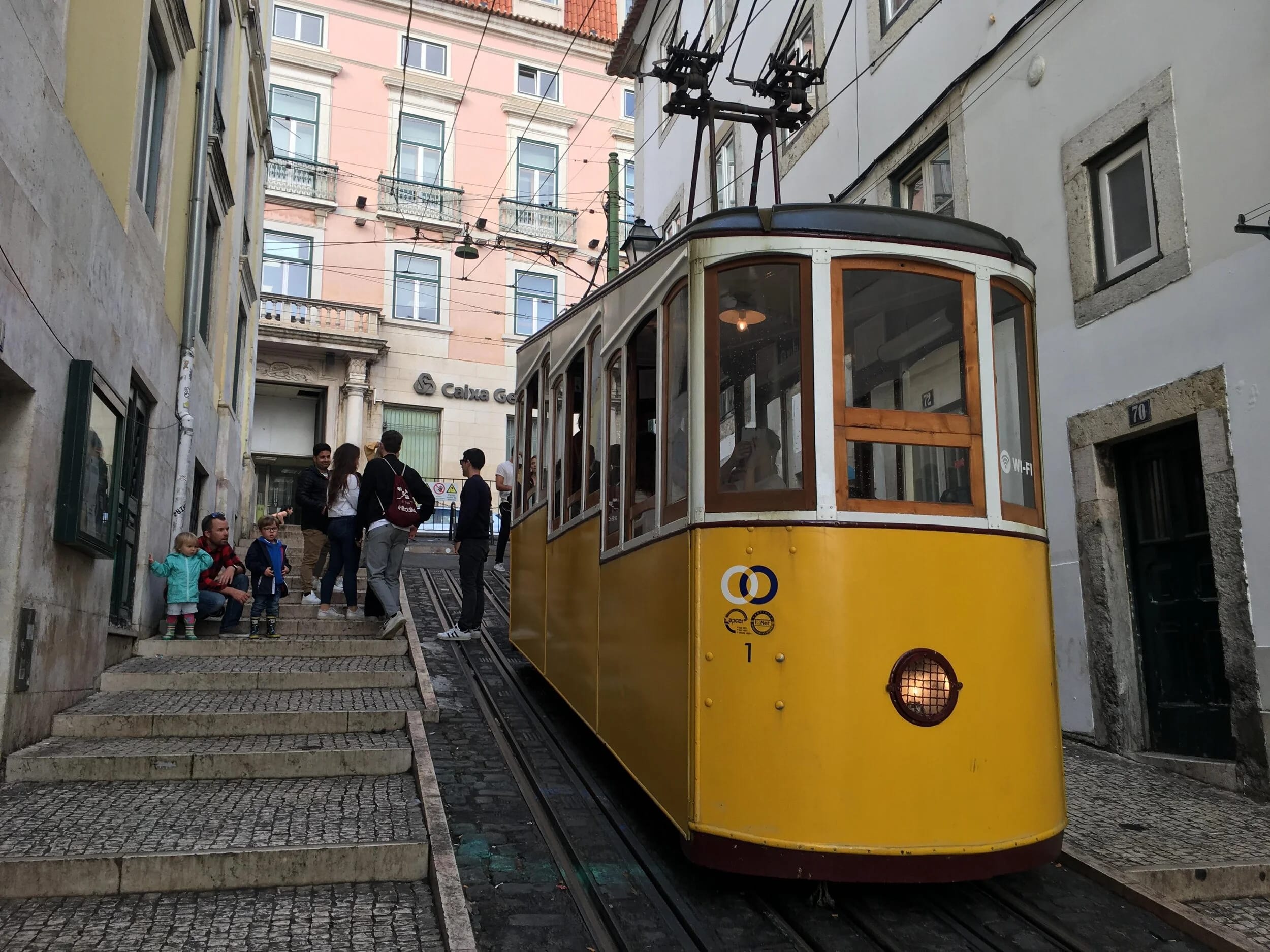
Many families have moved to Portugal or put it at the top of their shortlist. That's not because we push it - we sailed there for a few weeks. It's because when you lay out the criteria most families care about, safety, cost, schools, healthcare, visa accessibility, weather, and community, Portugal ticks more boxes than almost anywhere else in Europe.
Here's what we've gathered, some key info if you are considering it as a location.
Cost of living: genuinely affordable (with caveats)
Portugal is cheaper than the UK, France, the Netherlands, or Scandinavia. But it's not the bargain it was five years ago, especially in Lisbon. Rental prices in the capital have climbed sharply since 2021.
Rough monthly costs for a family of four:
- Lisbon: 3,500 to 5,000 euros depending on neighbourhood and lifestyle
- Porto: 2,800 to 4,000 euros
- Algarve: 2,500 to 3,800 euros
- Smaller towns (Coimbra, Braga, Setúbal): 2,000 to 3,000 euros
Groceries are cheap. Eating out is reasonable. Petrol is relatively expensive. Private school fees range from 400 to 1,200 euros a month depending on the school and location.
The Algarve offers the best combination of cost and quality of life for many families, though it's quieter and more spread out than Lisbon.
Visas: the D7 is still the go-to
The D7 (passive income visa) remains the most popular route for non-EU families. You need to prove passive income of roughly 760 euros per month per adult (the minimum wage), plus 50% for a spouse and 30% per child. So a family of four needs about 1,300 euros in provable passive income.
That can come from pensions, rental income, dividends, or savings interest. Remote work income can qualify too, though the rules on this shift periodically.
The process involves a Portuguese consulate application, an NIF (tax number), a Portuguese bank account, and proof of accommodation. Budget three to six months from first application to approval. It's not fast, but it's manageable.
The Digital Nomad Visa launched in 2022 and is another option if you're working remotely for a non-Portuguese employer and earning at least four times the Portuguese minimum wage (roughly 3,000 euros/month).
Schools: three realistic options
Portuguese public schools are free and decent. The quality varies by area. Lisbon and Porto have stronger options. Class sizes are reasonable (around 25 students). The obvious barrier is language; instruction is in Portuguese and most schools don't offer language support for incoming foreign students.
International schools teach in English (or other languages) and follow curricula like the IB, British, or American systems. They cost between 5,000 and 15,000 euros per year. There are good international schools in Lisbon, Porto, the Algarve, and Cascais. Waiting lists exist at the popular ones, so apply early.
Homeschooling is legal in Portugal. You register with the local school and submit an educational plan. Portugal is one of the easier European countries for this. There's a growing community of homeschooling and worldschooling families, particularly in the Algarve and around Ericeira.
Healthcare: good service
Portugal's public healthcare system (SNS) is available to residents and covers most services for free or with small co-pays. It's not perfect; wait times for specialist appointments can be long. But for routine care, A&E, and maternity, it works well.
Private health insurance is affordable by European standards. A family of four can get good cover for 200 to 400 euros per month. Many international families use a mix: public for emergencies and GP care, private for faster specialist access and dental.
Pharmacies are everywhere and pharmacists are often more helpful than in northern Europe. You can get advice and some medications over the counter that would require a prescription elsewhere.
The community factor
This is what puts Portugal over the top. The international family community is large, established, and welcoming. In the Algarve especially, there are co-working spaces with childcare, regular meetups, homeschool co-ops, and a genuine sense of belonging that forms quickly.
Lisbon and Porto have thriving international communities too, though they're less family-focused and more oriented toward young digital nomads and startup types.
The Portuguese themselves are warm and patient with foreigners. Most younger people speak English well. The culture is relaxed, family-oriented, and food-centric in a way that makes daily life pleasant rather than stressful.
The downsides (because nothing is perfect)
Bureaucracy. Portugal's administrative systems are slow, paper-based, and occasionally maddening. Getting your NIF, opening a bank account, registering for healthcare, and enrolling in school all involve queues, paperwork, and appointments that get rescheduled. Budget patience.
Wages are low. If you're planning to work locally rather than remotely, the minimum wage is around 870 euros per month in 2026. Most international families succeed here because they have remote income, passive income, or savings.
Outside Lisbon and Porto, you'll need a car. Public transport in rural areas and the Algarve is unreliable.
Portuguese buildings aren't built for cold weather either. Winters in the north can be damp and chilly indoors. Central heating is rare. Bring slippers and a good space heater.
Our take
Portugal isn't the right fit for every family. But for families with remote income who want a safe, warm, affordable base in Europe with good schools, solid healthcare, and a welcoming community, it's hard to beat.
If you're considering Portugal and want help figuring out the visa, schools, budget, or location, book a call.
